

An ACL injury is a tear or damage to the anterior cruciate ligament, a crucial ligament in the knee joint. It runs diagonally across the femur and tibia, providing stability and controlling rotational movements. Commonly experienced by athletes in sports requiring quick changes, jumping, and cutting movements, ACL injuries can range from mild sprains to partial or complete tears.
The most causes of an ACL injury include:
- Non-contact injuries: ACL injuries mostly occur in sports activities, often caused by sudden deceleration, cutting, pivoting, or jumping, and can result in strain or tornness.
- Sudden stops and changes in direction: Rapid stops, and changes can strain the ACL, especially when planted firmly.
- Landing incorrectly: Poor landing mechanics, knee extension, or valgus position increase ACL injury risk.
- Twisting and hyperextension: Knee twisting or hyperextension can cause ACL injury.
- Direct impact: ACL injuries can result from direct impact, including collisions or falls.
- Gender: Females are more susceptible to ACL injuries in sports like soccer, basketball, and gymnastics due to factors like anatomical, hormonal, and neuromuscular.
- Muscle imbalance: Quadriceps, hamstring imbalances, core, and hip stability increase ACL injury risk.
- Fatigue: Fatigue causes poor movement, reduced muscle control, and increased risk of ACL injury.
- Previous ACL injury: Previous ACL tear or inadequate rehabilitation increases knee vulnerability.
- Playing surface: Artificial turf increases ACL injury risk due to higher friction and stiffness.
An ACL injury can cause pain, swelling, and knee instability, with some experiencing popping sounds. Treatment depends on the extent of damage and individual activity level. Conservative management, such as physical therapy and bracing, may restore stability, while surgical reconstruction may be recommended for complete tears or high-demand sports. Rehabilitation is crucial for recovery, strengthening muscles, improving knee stability, and restoring normal function. Consult a healthcare professional or orthopaedic specialist for proper evaluation and management, as early diagnosis and treatment can lead to better outcomes and reduce the risk of long-term knee problems.
Exercises for strengthening ligaments and joints after ACL surgery:
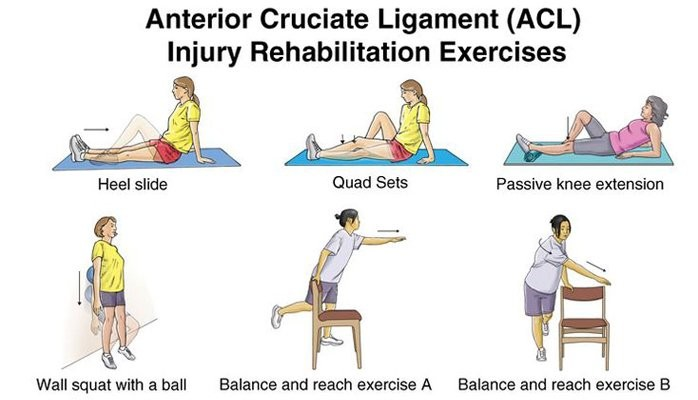

Following ACL surgery, a structured rehabilitation program is crucial for strengthening knee ligaments and joints, restoring stability, improving range of motion, and regaining strength and function. Consult a healthcare professional or physical therapist before starting any exercise program to ensure appropriateness for your specific situation.
Common exercises in ACL surgery rehabilitation:
- Follow a structured rehabilitation program: A qualified physical therapist is essential for designing personalized rehabilitation plans and guiding exercises and progressions based on individual needs and recovery stages.
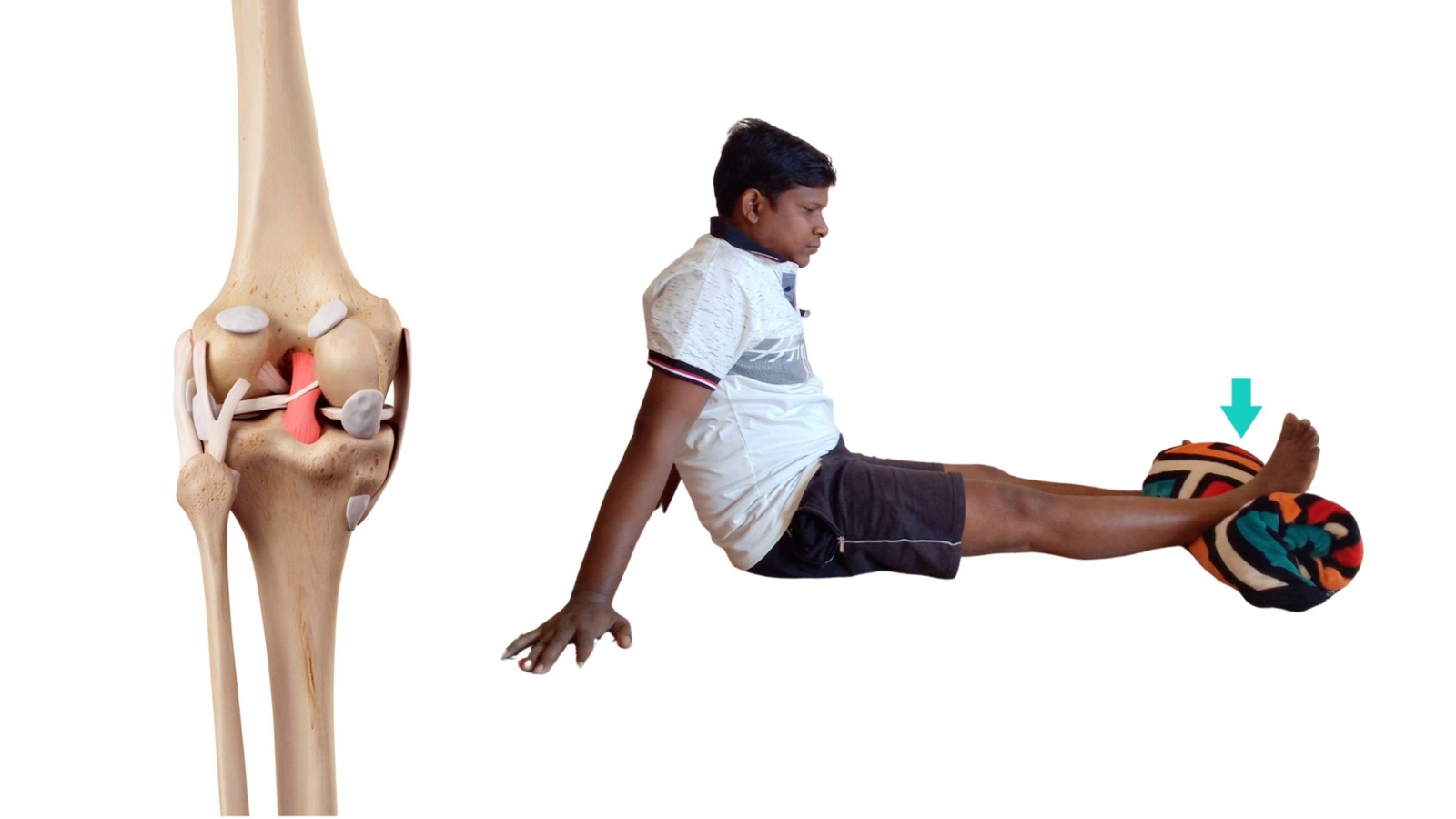
- Range of motions: Recover full knee range of motion through exercises like heel slides, knee flexion, extension, and ankle pumps, improving flexibility to prevent stiffness and promote healing.
- Quadriceps sets: Sit with legs straight, contract quadriceps by pushing knee into floor, hold for a few seconds, then relax, repeat multiple times.
- Straight leg raises: Perform a leg raise with one leg straight and the other bent, holding for a few seconds, then slowly lower. Gradually increase repetitions.
- Hamstring curls: Perform a controlled exercise with a chair, bending knees, bringing heel towards buttocks, and slowly lowering leg back down.
- Wall slides: Perform a squat with the back against the wall, knees aligned, holding for a few seconds, then return to starting position.
- Step-ups: Perform a step-up with the surgical leg, step down with the other leg, repeat several times, and switch legs.
- Balance exercises: Improve knee function through balance and stability exercises like single-leg stance and balance board.
- Stationary cycling: Stationary cycling improves knee flexibility and strengthens muscles without excessive joint stress during recovery.
- Resistance training: Gradually incorporate resistance exercises to strengthen the quadriceps, hamstrings, and calf muscles.
- Core exercises: Core muscle strengthening enhances knee stability through exercises like planks, bridges, and abdominals.
- Closed-chain exercises: Closed-chain exercises like squats and lunges improve knee joint strength and stability through foot contact.
- Open-chain exercises: Open-chain exercises target quadriceps but should be cautiously incorporated, as they can put more stress on the ACL.
- Polymetric exercises: Plyometrics, like jumping drills, lateral hops, and box jumps, improve power and agility after basic strengthening exercises supervised by a physical therapist.
- Bridging exercises: Engage gluteal muscles by lying on the back, lifting hips upward, and strengthening core muscles.
- Agility training: Use drills resembling real-life movements and sports-specific activities to improve knee confidence and functionality.
- Glute bridges: Engage gluteal muscles by lying on your back and lifting your hips.
- Heel slides with resistance band: Resistance band sliding one foot away targets hip abductors and adductors.
- Mini squats: Squats strengthen the quadriceps and glutes with proper knee alignment.
- Calf raises: Toe rise targets calf muscles.
- Patience and consistency: ACL rehabilitation requires time, dedication, and gradual progress for long-term success, avoiding excessive pushing or fast movements.
A qualified physical therapist can tailor the rehabilitation program to your needs and ensure a safe and effective recovery after ACL surgery. The therapist will gradually progress exercises based on your recovery and strength gains. Patience and consistency are crucial for optimal outcomes. Start with low intensity and gradually progress as your knee heals and gains strength. Work closely with your healthcare professional or physical therapist to monitor progress, make adjustments, and ensure proper exercise performance to minimize re-injury risk.
About Dr Anjani Kumar
As an orthopaedic surgeon in Hyderabad, I try to provide patients with as many options as possible for hip and knee treatments to help each patient have the greatest results. I carefully consider the specific sorts of injuries and need to be comfortable offering a specialised solution before recommending the best course of therapy for each patient. My patients’ enhanced mobility and pain reduction are always my top priorities, as these will enable them to resume an active lifestyle. In more severe cases, especially when the joint has collapsed, or the bone has suffered extensive deformation, knee replacement surgery may be advised.
Knee replacement surgery may be recommended in advanced cases, especially if the joint has collapsed or the bone has become severely deformed.
Dr Anjani Kumar has 20 years of experience and successfully performed 2000 knee replacement surgeries, 350 hip replacement surgeries, and 500 pelvic acetabular surgeries throughout his career. Please get in touch with us on Mobile: at +91 9989112411 and by E-mail: anjanikumar@ gmail.com


